Story Line
The German Aces Speak II: World War II Through the Eyes of Four More of the Luftwaffe’s Most Important Commanders offers a calm, reflective return to a turbulent past. Through carefully preserved interviews, four veteran fighter pilots recount their experiences of duty, loss, responsibility, and life after war. Their voices do not glorify conflict; instead, they help us understand its cost, its complexity, and its lasting impact on a generation. You are warmly invited to listen to the full audiobook—or, if possible, to own the book itself—for a more complete and contemplative appreciation of these memories.

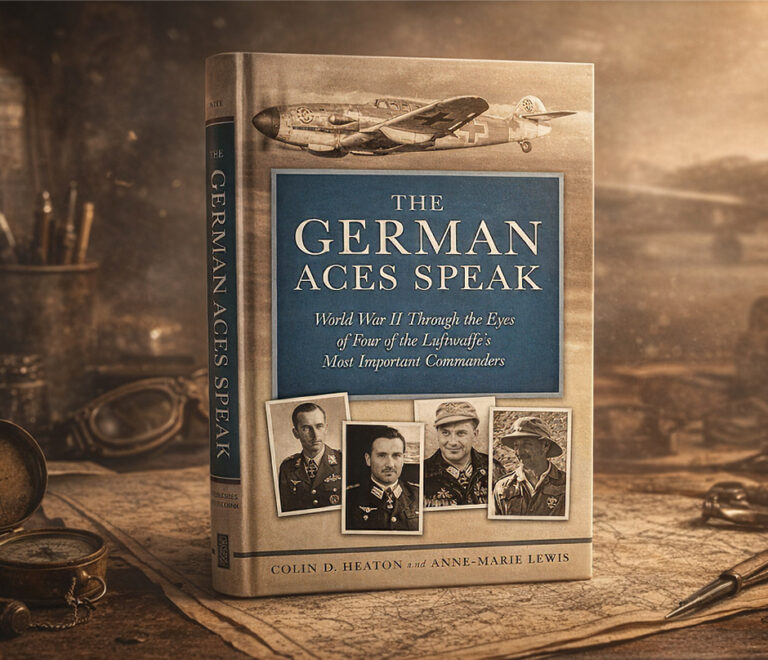
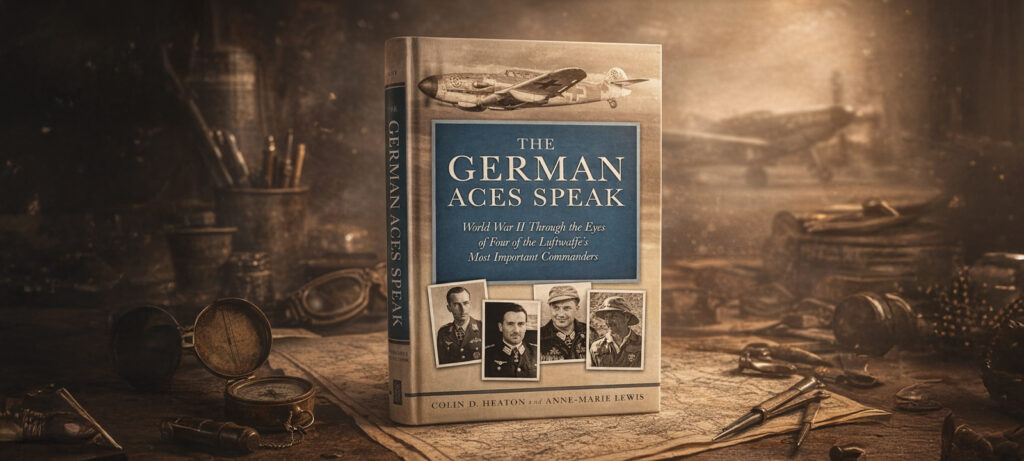
What did the air war of World War II look and feel like from inside the cockpit of a Luftwaffe fighter, through the eyes of the men who flew, bled, and survived it? The German Aces Speak II: World War II Through the Eyes of Four More of the Luftwaffe’s Most Important Commanders invites listeners into that rarely heard perspective. Built on decades of in-depth interviews conducted by military historian Colin D. Heaton, this volume lets four of Germany’s most significant fighter aces tell their stories in their own voices, with all the contradictions, insights, and hard-earned honesty that only direct witnesses can offer.
Rather than offering a conventional history written from the vantage point of the victors, the book functions as an oral history from within the Luftwaffe. It reveals the lives and experiences of Johannes Steinhoff, Erich Alfred Hartmann, Günther Rall, and Dieter Hrabak—men who not only amassed extraordinary aerial victory counts, but later went on to hold senior leadership positions in the postwar West German air force within NATO. Through their memories, we see how the German air war evolved from early triumphs to eventual collapse, and how these pilots themselves changed as the conflict unfolded.
Each ace brings a distinct voice and background. Erich Hartmann, still the highest-scoring fighter pilot in history with 352 confirmed victories, reflects on the brutal tempo of operations on the Eastern Front and the discipline required to survive hundreds of sorties. Johannes Steinhoff, later a key figure in rebuilding the Bundesluftwaffe, speaks not only about combat but also about his clashes with Nazi leadership and his role in confronting Hermann Göring over the misuse and mismanagement of Germany’s air arm. Dieter Hrabak and Günther Rall add further dimensions: leadership at squadron and wing level, the pressure of mentoring younger pilots, and the challenge of fighting in vastly different theaters under increasingly unfavorable conditions.
The narrative moves between front-line dogfights, life on the ground, and the pilots’ postwar reflections. There are vivid accounts of air combat: formations of Messerschmitts or Focke-Wulfs climbing into hostile skies, split-second decisions in turning dogfights, and the constant calculation of energy, altitude, and ammunition. At the same time, the book explores quieter but equally revealing moments—banter in mess halls, grief over fallen comrades, frustration with poor strategic decisions, and the psychological weight of being expected to perform as “aces” long after the war had clearly turned against Germany.
One of the book’s most striking qualities is its moral and emotional complexity. Heaton and Anne-Marie Lewis present the interviews without turning them into propaganda or simple condemnation. Instead, the pilots speak about serving a regime whose ideology many of them did not fully share, about their views of Göring and Hitler, and about the distinction they tried to draw between professional duty and political belief. In some passages, readers will encounter open criticism of Nazi leadership; in others, lingering blind spots or rationalizations. That tension is precisely what makes the material valuable, forcing us to confront how individuals navigate loyalty, responsibility, and survival in a criminal state.
Beyond the ethical questions, The German Aces Speak II also serves as a rich technical and operational window into the air war. The aces discuss aircraft handling characteristics, tactics against Soviet, British, and American opponents, and the rapid technological arms race in the skies. Their comments shed light on why some pilots were able to accumulate such high tallies, how training and experience differed between sides, and how shortages of fuel, spare parts, and replacement crews gradually eroded the Luftwaffe’s effectiveness. For listeners interested in aviation history, these details are both fascinating and instructive.
The structure of the book—organized around four extended profiles—also makes it accessible. Rather than drowning the reader in statistics and unit designations, it anchors the broader history in personal life stories: early years, entry into the air force, first victories and near-misses, wounds and hospital stays, the moment each man realized the war was lost, and the long process of rebuilding a life after defeat. In several cases, the narrative touches on families, including Rall’s wife, a physician who risked her own safety to help Jews escape Nazi persecution, reminding us that resistance and moral courage could emerge even in the heart of a regime built on terror.
For anyone who wants to understand World War II in the air from all sides—not only from Allied squadrons—this book fills an important gap. It does not ask the listener to admire its subjects uncritically, but it does insist that their testimonies are part of the historical record and that their experiences, for better and for worse, shaped the course of the war. By the end, we are left with a three-dimensional picture: gifted pilots, sometimes brilliant and sometimes deeply flawed, caught between patriotism, professional pride, fear, and the harsh realities of a total war they ultimately could not win.
If you are searching for an audiobook that combines aviation history, first-hand testimony, and thoughtful reflection on responsibility and memory, The German Aces Speak II is a powerful choice. It will challenge, inform, and at times unsettle you—but it will also deepen your understanding of what it meant to fight, and to live, as a Luftwaffe pilot in history’s most devastating conflict. Click the link to explore the full audiobook and hear these voices in their own words.